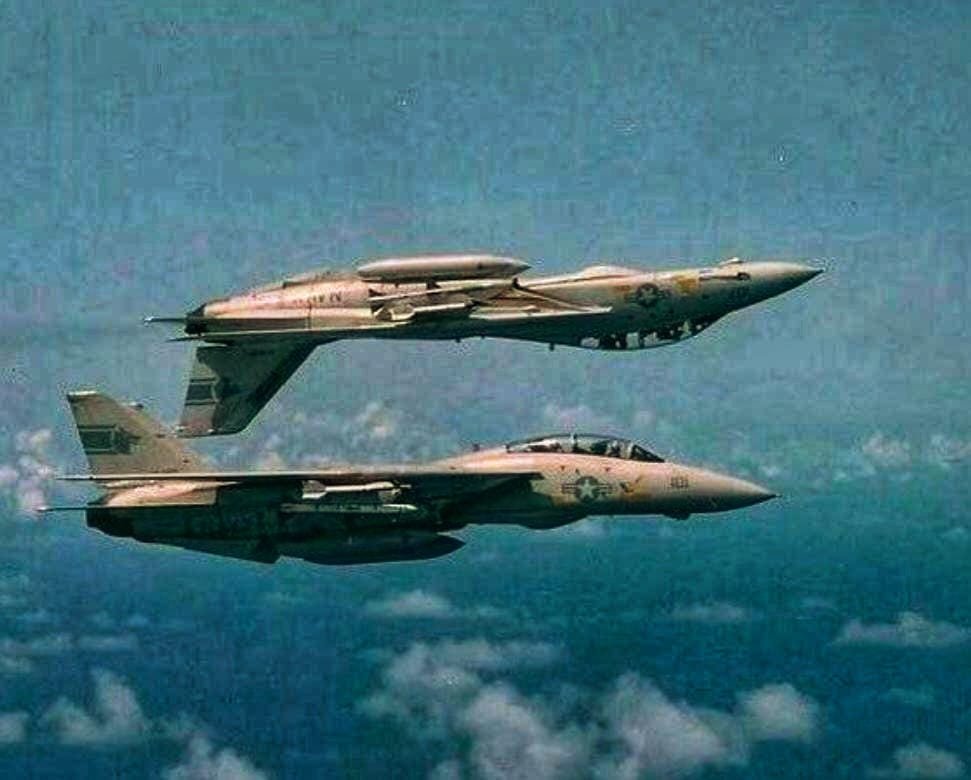
DISCLAIMER- The author is a serial storyteller. ‘Danger Zone’ ahead.
It was the summer of my third grade when my rather tech-savvy father acquired a Sony 4K home theatre projector. A considerable investment, by any reasonable standard. Fortunately, he had an easily excitable, movies-loving eight-year-old daughter who could be relied upon to defend almost any purchase to the Mrs, provided it came with Mcdonald’s.
And so, one fine afternoon, he came running to me with a proposition.
“Listen, Mumma is going to a garden party. And we’re having a movie night on the terrace to test out this thing I bought for ‘you’. Call Rashi and Arnav too.”
A movie night at my place? My otherwise socially awkward self was already won.
I spent the entire day waiting. By six in the evening, my friends had arrived, Papa was making butter popcorn in our brand new microwave, and I was already having the time of my life. Then came the difficult part: choosing a movie.
We protested Papa’s recommendation for the better part of forty five minutes. My brother, meanwhile, defended it with all of his might (& tears). Eventually, democracy failed us, and we settled on Top Gun.
In retrospect, I should have known better than to challenge a man who had spent his time sketching fighter aircraft on our drawing room walls.
I barely understood half the rapid fire English at the time, but what I did understand was that these men-in-uniform were impossibly clever, inexplicably cool, and having a considerably better time at work than all the uncles I knew. The actors were certainly NOT bad to look at either.
Somewhere between the dogfights, the sunglasses and the volleyball scene, I was introduced to the concept of working hard and playing harder. I also discovered that aerial combat was not the only place where chemistry could be extraordinary. Mav and Goose were, quite simply, a dream. I am fairly certain Jerry Lee Lewis wrote for them. Not Carole, not Charlie. Just two men, one aircraft and an almost criminal amount of chemistry. (that Ice was jealous of fs)
Which makes Goose’s fate particularly offensive. He was only the funniest, coolest character I had ever seen.
But I digress. This is, after all, a supposed article about aviation, not my longstanding grievance against the writers of Top Gun. Although the two are admittedly difficult to separate.
A family of blues, and one man who dreamed of it
I come from a family in which the Indian Air Force is less a profession than a recurring family tradition. Several of my relatives have worn the blue uniform, and one was part of the first batch of India’s low-level flying course, attached to the United States Navy Fighter Weapons School, or as you and I know it, Top Gun, in 1969.
I grew up on stories of this certain relative’s brilliance, my father’s unmistakable origami F-15s, and with a seemingly inexhaustible supply of aviation anecdotes. The skies were always somewhere in the background of my childhood.
There is, however, a small detail that tends to surprise people. My father is not in the Air Force.
He wears a different uniform, but the blue has always occupied a special place in his imagination. Flying was a dream of his long before it became mine, and perhaps that is what made it so easy for me to inherit. I had a family full of people who understood the profession, a father who could draw the aircraft, and a film that made the entire business look like the most magnificent thing a person could do with their life.
I had all the makings of an aviation enthusiast. The only thing missing was an aircraft (and a 6/6 vision).
Naturally, I made do with the internet.
There were hours spent looking up aircraft, watching cockpit videos, reading about fighter pilots and begging my parents to take me wherever I might catch a glimpse of a camoed tarmac. I went through my fair share of cinematic obsessions too, from DiCaprio to Matt Damon, because apparently the only thing better than a man who could fly an aircraft was a man who could fly an aircraft and deliver a good monologue.
But childhood dreams have an inconvenient habit of being interrupted by adulthood.
Somewhere along the way, law school happened. There were classes, deadlines, internships and the slow accumulation of things one is supposed to want. Aviation became one of those interests I carried quietly, occasionally revisiting it with the fondness one reserves for an old photograph. I had not stopped loving it. I had simply become rather good at forgetting to.
Then came Top Gun: Maverick.
Watching it felt less like discovering a sequel and more like being introduced to someone I had known all my life, but had not spoken to in years. The aircraft were more advanced, the cinematography was spectacular, and the pilots had somehow managed to look even cooler. The technology had changed, too. Modern fighters rely on far more than a pilot’s eyesight and reflexes. Radar, EWS, helmet-mounted displays and sensor fusion help turn an overwhelming volume of information into a coherent picture of the battlespace. The aircraft may do some of the processing, but the pilot still has to make the decisions. (AI can’t help everywhere)
Which is, incidentally, a rather good description of what I was trying to do with my life.
I had accumulated years of interests, ambitions and responsibilities, and somewhere in the process, I had forgotten how to make sense of them together.
It took a film about a man who refuses to outgrow his calling to remind me of the one I had nearly outgrown.
And then, rather unexpectedly, the law brought aviation back into the picture.
While researching and emceeing for the Leiden Sarin International Air Law Moot, was where I found myself returning to a subject I had loved long before I knew there was an entire field of law devoted to it. For once, the worlds of my childhood and my present were not competing for my attention. They were talking to each other.
Turns out, one can spend years studying the law of the skies without ever getting to fly through them. A slightly unfair arrangement, if you ask me, but I was happy to take what I could get.
Danger zone, indeed.
My love for aviation has also occasionally made me a rather insufferable person to watch an aviation film with.
Take ‘Fighter’, for instance. I recently watched it while an entire squadron from the Trishul Airbase sat behind me. I was engrossed in critiquing the production, discussing ACM and questioning the way the film lied about it (and everything else). At some point, I suspect I forgot that I was at PVR with people who just came out for a peaceful weekend.
As I exited the audi, I ran into the CO’s daughter, who happens to be my sister’s friend. Soon, we had formed a little circle, and one of the YOs complimented my three-hour long “picture description”, as she called it.
She then asked if I had PCM, and ever thought of flying seriously. But before I could answer, another officer looked at me and ventured a guess.
“Judging by your face, ma’am, you’re either an overly confident aviation enthusiast or just an Air Marshal’s daughter.”
I was a little offended by the second one, if only because I had apparently failed to convey the appropriate level of humility. But I recovered quickly.
“Proudly the former.”
The laughter that followed was refreshing. For a brief moment, I was not merely a Jail student with the 5 useless presentations waiting at home. I was simply the girl who had once watched a movie on a terrace, surrounded by people who had no idea what they were setting in motion.
That evening, I did not get a movie, but a memory.
And perhaps that was needed.
The things we leave behind
I have often wondered how much of ourselves we lose while growing up.
We change our ambitions, our priorities and sometimes even the way we speak about the things we love. We become sensible. Practical. Realistic. We learn to distinguish between what we want and what we can reasonably expect to have. We become very good at explaining why certain dreams belong to an earlier version of ourselves.
The trouble is that we rarely notice when the explanation becomes an excuse.
Childhood memories have a peculiar way of surviving this process. We forget the details, misremember the order of events and occasionally discover that our parents’ recollections of the same incident are wildly different from ours. Yet something remains. A terrace on a summer evening. The smell of buttered popcorn. A father drawing aircraft on the walls. The first time a film made the world seem considerably larger than it had that morning.
These memories are not always grand. Sometimes they are embarrassingly small. A ridiculous argument with a sibling, an imaginary escape from home with a suitcase full of toys, a family holiday that seemed endless at the time. They sit quietly in the background until something brings them back, and suddenly we are home again.
Our childhood dreams do the same.
Perhaps you wanted to be an astronaut, a rock star, an Avenger or the sort of adult who could eat dessert before dinner without consequence. Perhaps you had an elaborate plan for your life that no longer makes sense to you. Perhaps you have achieved it. Perhaps you have not. Perhaps you have discovered something better along the way.
Growing up does not necessarily mean that we must fulfil every dream we have ever had. That would be exhausting, not to mention financially disastrous. We are allowed to change our minds. We are allowed to become people our younger selves would never have anticipated.
But I wonder if we owe those younger versions of ourselves the courtesy of remembering them.
For the longest time, I thought my love for aviation was simply something I had grown out of, that it had been replaced by other things, and perhaps that was how life was supposed to work. Then a film, a moot and one very unexpected conversation outside a cinema reminded me that the dream had not disappeared. It had merely been waiting for me to look up.
My father never became an Air Force pilot. Neither have I. But the dream was his before it was mine, and in a family where the blue uniform has been worn by so many, I have come to understand that a dream does not need to be fulfilled in precisely the way we first imagined for it to matter.
Sometimes it becomes a story. Sometimes it becomes a shared language between a father and daughter. Sometimes it follows you into a law school classroom, of all places, and gives you an entirely new way of looking at the world.
And sometimes, it takes a Sony projector, a terrace, a bowl of popcorn and two reluctant friends to set it all in motion.
So, whether we become attorneys, judges, servicemen or something our eight-year old selves could never have imagined, I hope we remember the things that once made us feel invincible. Not because we must return to them, but because they remind us that we were once capable of wanting something without first asking whether it was sensible.
There is something rather beautiful about that kind of courage.
And if, every now and then, you find yourself watching an aircraft cut across the sky (given we live in 68), or hear an old song that takes you back to a summer you had nearly forgotten, allow yourself a moment. You need not turn it into a life plan. You need not justify it to anyone. Just let yourself feel it.
And you will find that somewhere beneath the sensible adult we have worked so hard to become, there is still an eight-year old waiting for the movie to begin.
Mine is still on that terrace, watching Mav buzz ATCs.
I think I shall let her stay a little longer.
Because, in the end, growing up is not about leaving every childhood dream behind. Sometimes, it is about learning which ones are still worth carrying.
And if there is one thing I have learnt from Top Gun, from my father, and from the many people in my family who chose the skies and succeeded elsewhere too, it is this:
You may change your course. You may take the longer route. You may even end up somewhere you never expected. But every once in a while, you must remember to look up.
You may just feel the need…
The need for speed.
– This article has been written by Anushka Verma (2nd Year).