There’s a peculiar irony in studying law at an institution that has never heard of natural justice.
We learned about audi alteram partem in our first year. “Hear the other side,” our professors taught us, quoting ancient wisdom and modern precedent. We wrote exams on it, debated its nuances in moot courts, and genuinely believed with the earnest naivety of first-year law students that this principle was universal. That it applied everywhere. That it certainly applied in our own home.
We were wrong.
Six of our batchmates were called for an inquiry last month. The charge? “Ragging.” The evidence? None disclosed. The opportunity to defend themselves? A formality at best. The outcome? Pre-decided.
Heavy fines were imposed not because any finding of guilt was established, but because the administration needed a scalp. Needed to show that something had been done. Needed to prove that the machinery of discipline was well-oiled and functioning.
Every institution has traditions. Not the ceremonial ones printed in brochures, the real ones. The unspoken contracts. The passing down of experience. The quiet understanding that those who stayed the longest helped hold the place together. At AIL, that tradition was simple: seniors guided, juniors inherited, and the institution benefited from a living chain of mentorship. Competitions, internships, placements, moots, sports teams, societies none of these ran on notices alone. They ran on seniors who stayed back after classes, edited drafts at midnight, shared contacts, settled disputes, and occasionally just reminded juniors that surviving law school was possible.
We were raised by that system. And until recently, we proudly sustained it.
Now, apparently, we are dispensable.
This isn’t an isolated moment. It’s the culmination of a message we’ve been receiving all year: that our years of experience count for nothing, that our voices are background noise, that institutional memory is a thing to be erased, not honoured. Forty percent of us were uprooted from hostels on short notice at the start of this session, because first years needed rooms and our presence was apparently negotiable.
That was the opening act. This is the finale.
Maybe the administration has forgotten who we are. Let us remind them.
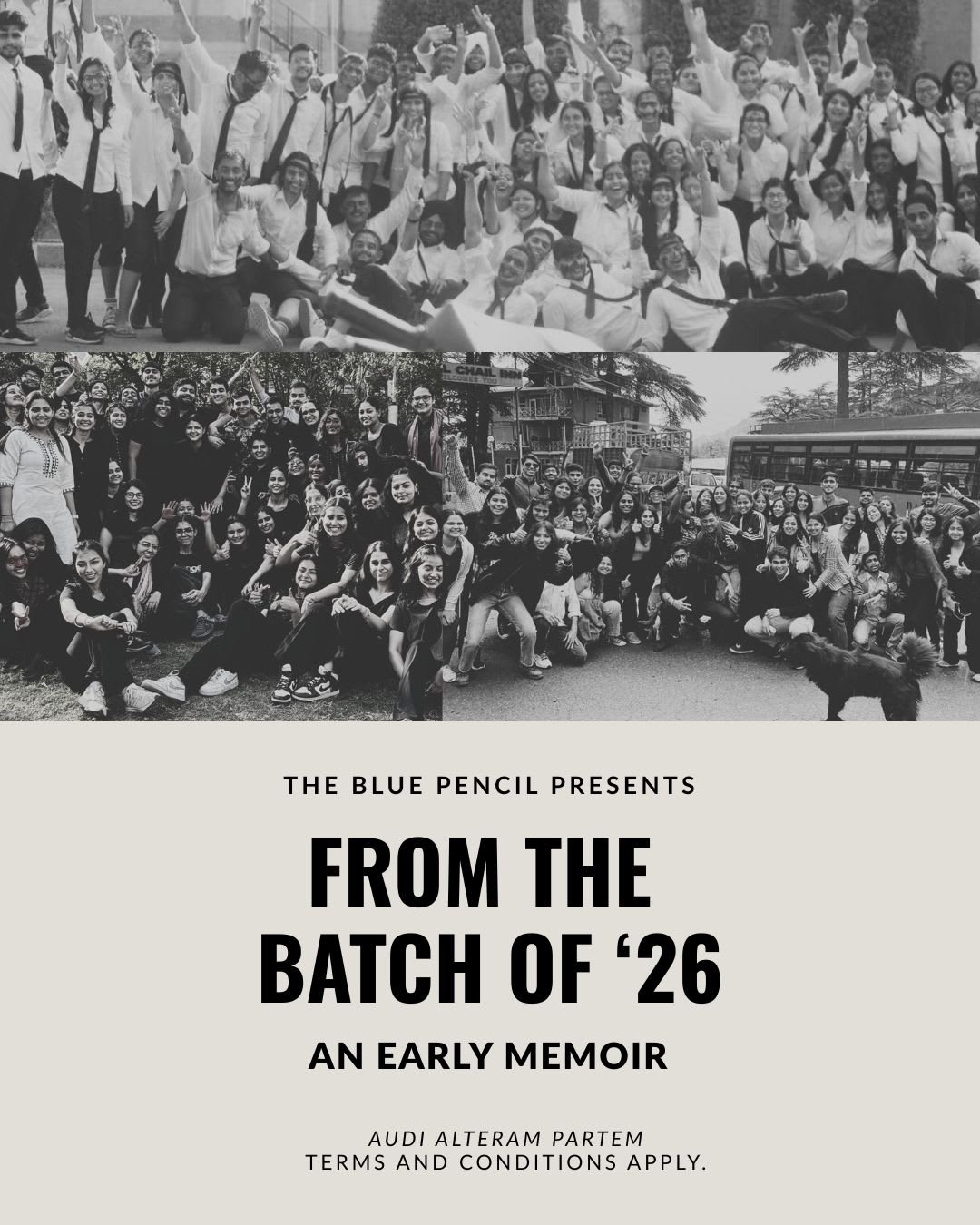
We are Batch of 2026. We began law school not in a classroom, but on Zoom in bedrooms, at dining tables, wherever the Wi-Fi reached. We built friendships through screens, learned law through PDFs, and waited a year for the campus we had been promised. When we finally returned, we returned with gratitude. We threw ourselves into everything. We revived moots, debates, mediations, sports, music and practically everything.
We remember when the guestrooms and the green room quietly became hostels. When the additional girls’ hostel was just the boys’ single wing. When 9 PM in-times, campus curfews and physical roll calls meant the college still felt like a community that checked on each other, that was responsible to each other.
We remember because we were there.
And we kept serving. Even as our voices were ignored, even as we were evicted, even as the message became unmistakable-we served. Because we believed in this place, because since 2021, we have called it our home.
But home, we have learned, does not always love you back.
So here is where we stand. The Student Body resigns. The societies and centres dissolve. The Batch of 2026 withdraws from every college activity. No events. No fests. No unpaid labour dressed up as opportunity. The machinery that kept so much of this institution running stops today. We stand with our six batchmates, because their punishment was meant for all of us, and we refuse to pretend otherwise.
Batch of 2026 signs off.